It's been a couple of months since we delivered our first post-smolt batch from Hausvik, so we thought it was a good time to check in on how the fish are doing. Post-smolt production is becoming an increasingly important stage in modern salmon farming, giving fish a controlled, low-stressed start before they move to open water, and the results from our first batch, both in our facility and after the move to sea, offer an early look at how well our mRAS module is suited to that job.
How the Fish Did in Our Tank
The fish arrived at around 110 grams and stayed with us until they reached an average weight of 1.1 kg. Growth was strong, well above standard growth curves at an average temperature of 8.5°C.
The fish also fed well. The feed conversion ratio (FCR) came in at 0.86, meaning they used less than one kilogram of feed to gain one kilogram of weight, a highly efficient result for post-smolt production.
"The growth and feed conversion we saw with this batch confirm that a stable, controlled environment gives the fish a real head start before they ever reach open water."
Mats Staddeland, Head of Technology EcoFishCircle
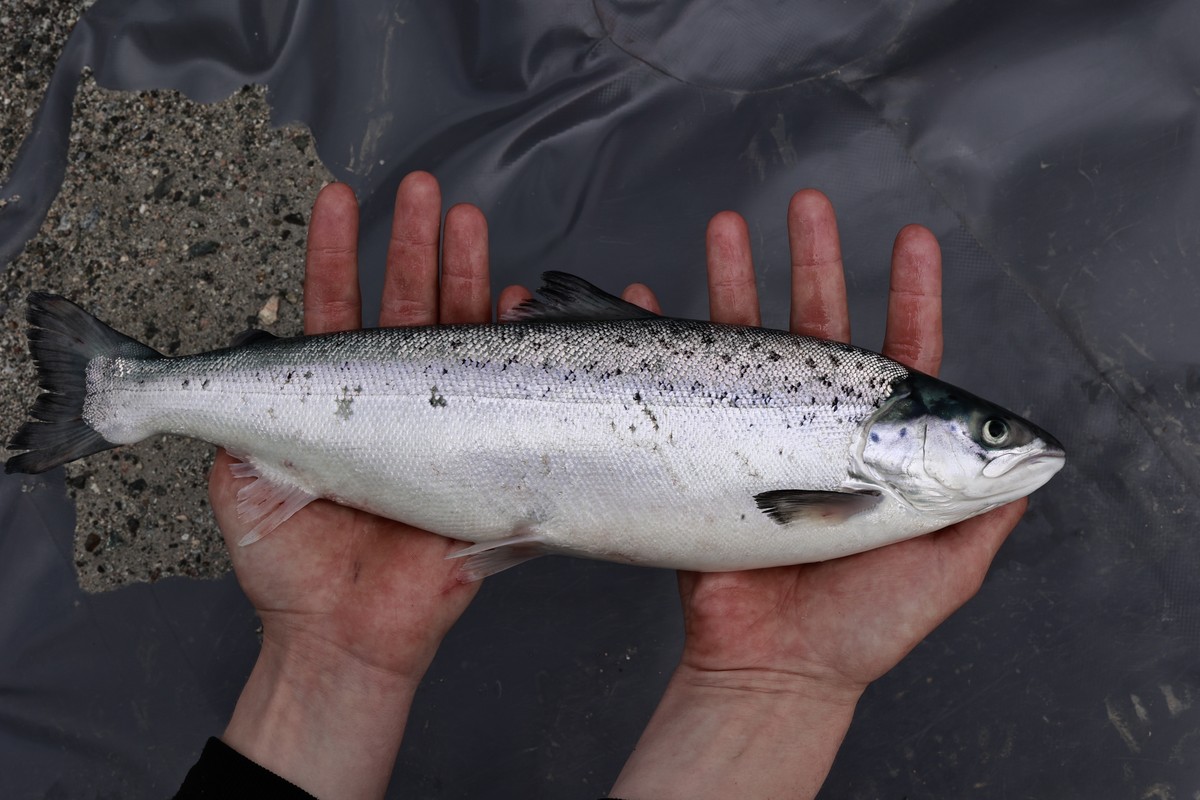
Health outcomes were equally strong: mortality was low, at 1.6%, and regular veterinary visits and testing confirmed good fish welfare throughout the period. Water quality stayed stable from start to finish, with no operational downtime along the way.
From Land to Sea: How Are the Fish Settling In?
The transfer marked the completion of a full production cycle, with over 74 tonnes of biomass delivered in total. The fish were transported by boat to Hellesund Fiskeoppdrett's site at Kjeholmen on June 8, weighing around 1.07 kg, in line with the weight at delivery. The operation went smoothly: no elevated mortality was recorded, and no signs of stress were observed once the fish were in the vessel.
As expected with any handling event, the well-boat transport and adjustment to open sea conditions came with some losses, roughly matching the mortality already reported for that period. The fish settled in within about two weeks, after which appetite and mortality returned to normal levels, in line with the rest of the stock at the site.
"The fish handled the transition to sea well. After the first couple of weeks they were behaving just like the rest of the stock on site, in terms of both appetite and mortality."
Karl Olaf Jørgensen, Chairman Hellesund Fiskeoppdrett
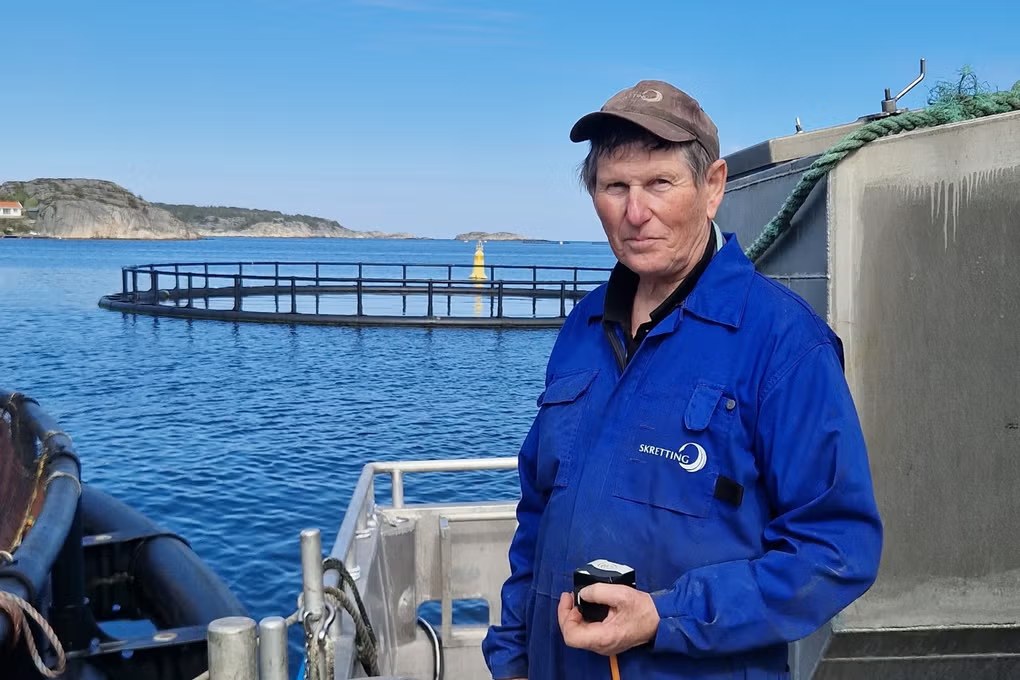
Photo: Hellesund Fiskeoppdrett AS
By August 8, average weight had reached around 1.78 kg, with a condition factor of 1.25, indicating fish in good physical shape. Exact feed consumption for this period isn't available yet, though it's expected to be somewhat less efficient than what was achieved in the land-based tank, where oxygen levels and water currents could be tightly controlled.
"So far, everything has stayed within the normal range for a transfer like this, and if that continues, we're looking at smooth sailing ahead."
Åge Igland, CEO Korshavn Havbruk
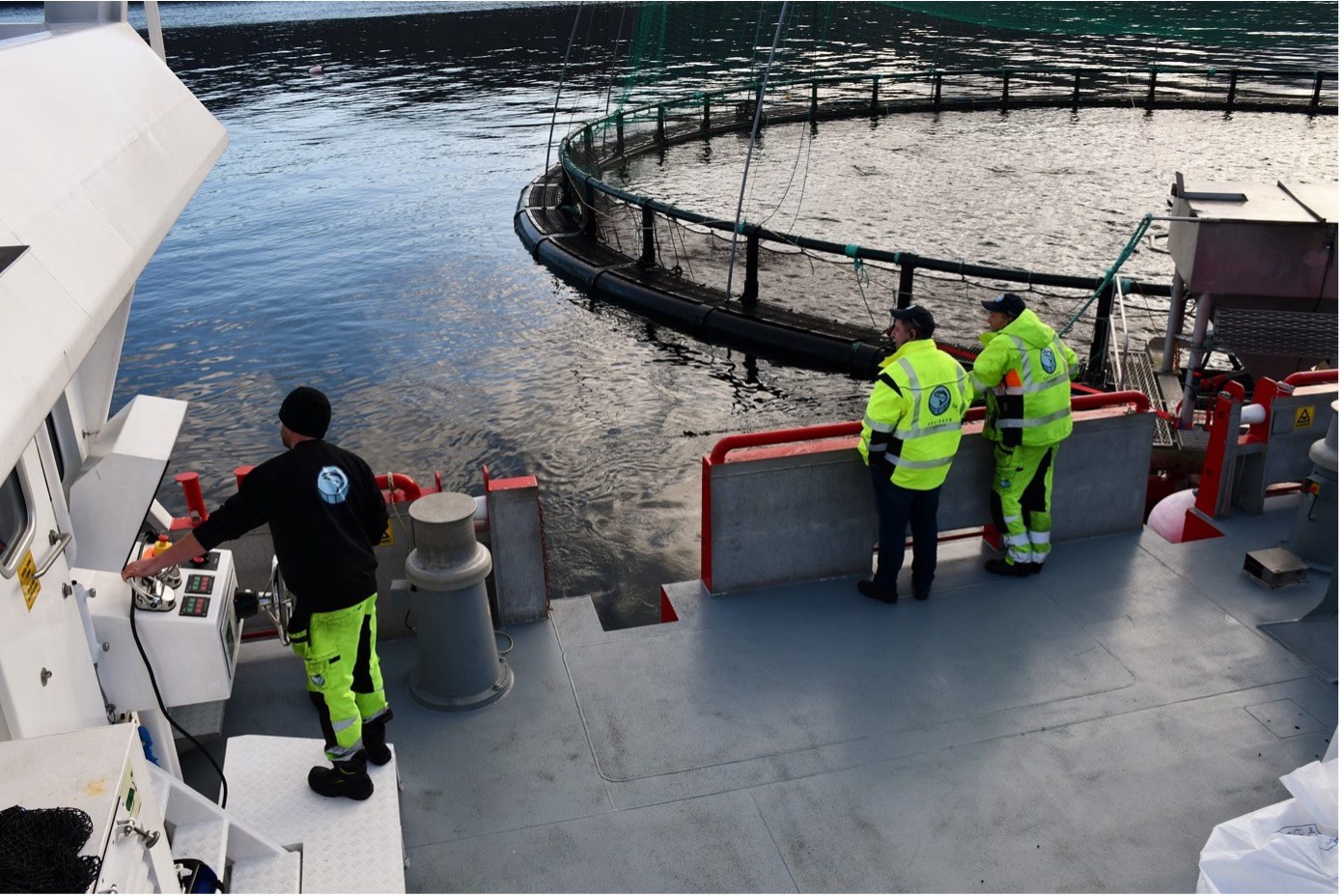
Photo: Lister24.no
At EFC, we are now preparing for our second post-smolt production batch. We've used the time between batches to fine-tune and improve the efficiency of our system, and we're looking forward to showing that our mRAS technology can continue to deliver market-leading performance.